

Dive into the world of Korean cuisine with this spicy cabbage kimchi recipe. This traditional dish is known for its bold flavors and health benefits, making it a staple in many households. Perfect as a side dish or a condiment, this kimchi will add a spicy kick to any meal.
Some ingredients in this recipe may not be commonly found in every household. Napa cabbage is a type of Chinese cabbage that is essential for authentic kimchi. Gochugaru, or Korean red pepper flakes, provides the signature heat and color. Fish sauce and daikon radish are also key components that might require a trip to an Asian supermarket.
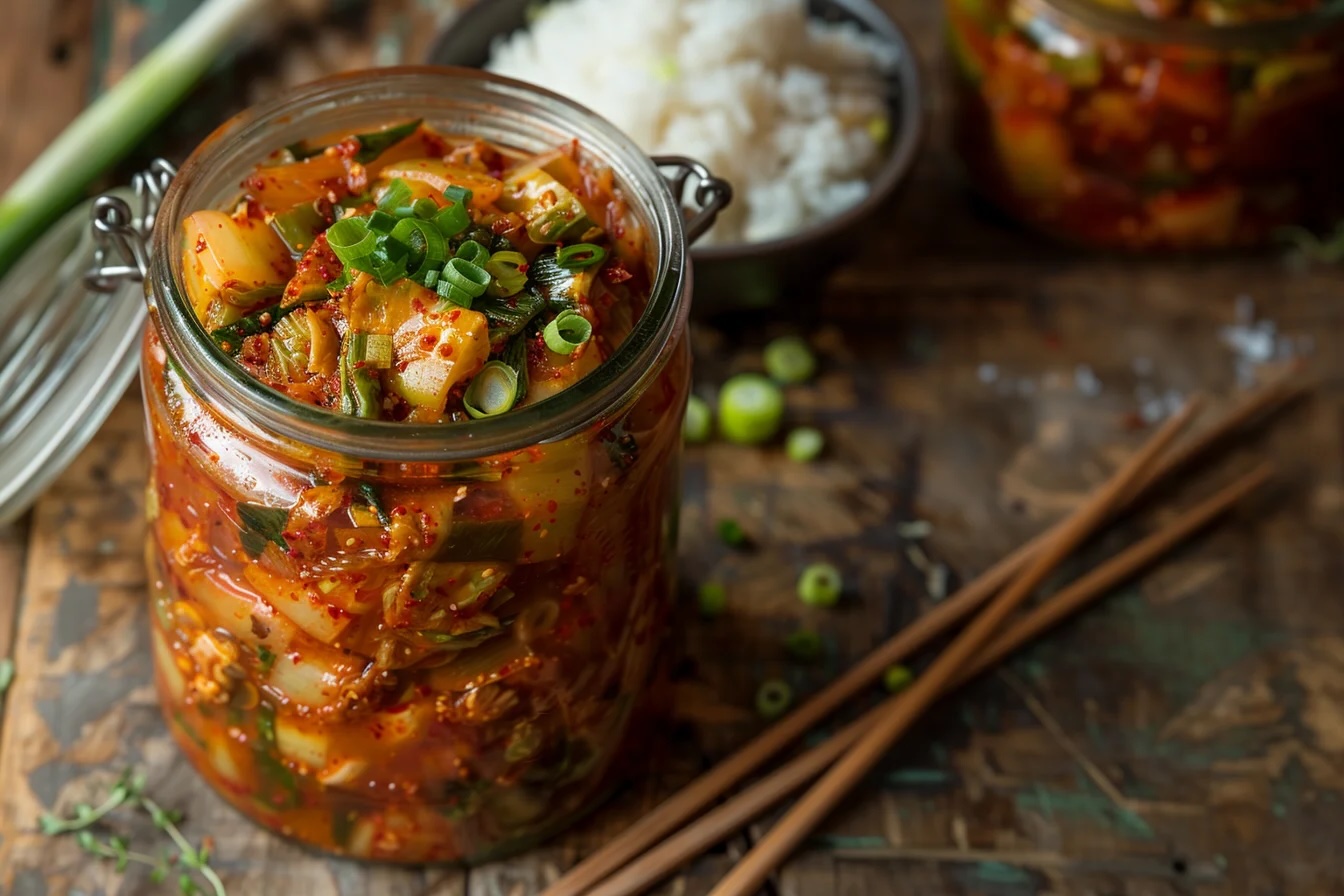
Ingredients For Spicy Cabbage Kimchi Recipe
Napa cabbage: A type of Chinese cabbage that is the main ingredient for kimchi.
Sea salt: Used to draw out moisture from the cabbage and aid in fermentation.
Ginger: Adds a zesty, aromatic flavor to the kimchi paste.
Garlic: Provides a pungent, savory depth to the kimchi.
Sugar: Balances the flavors and aids in fermentation.
Fish sauce: Adds umami and depth to the kimchi.
Soy sauce: Contributes a salty, savory flavor.
Gochugaru: Korean red pepper flakes that give the kimchi its heat and vibrant color.
Green onions: Adds a mild onion flavor and crunch.
Carrot: Provides sweetness and texture.
Daikon radish: Adds a crunchy texture and mild peppery flavor.
Technique Tip for Making Kimchi
When preparing napa cabbage for kimchi, it's crucial to ensure that the salt is evenly distributed. This helps to draw out moisture and create the perfect texture for fermentation. After salting, make sure to rinse the cabbage thoroughly to remove any excess salt, as too much can hinder the fermentation process. When mixing the vegetables with the spice paste, use gloves to protect your hands from the red pepper flakes. Finally, when packing the mixture into the jar, press down firmly to eliminate air pockets, which can cause uneven fermentation.
Suggested Side Dishes
Alternative Ingredients
napa cabbage - Substitute with green cabbage: Green cabbage has a similar texture and can be used in place of napa cabbage, though it may be slightly less tender.
sea salt - Substitute with kosher salt: Kosher salt has a similar grain size and salinity, making it a good substitute for sea salt.
grated ginger - Substitute with ground ginger: Ground ginger can be used in a pinch, though it will have a slightly different flavor profile. Use about half the amount.
garlic - Substitute with garlic powder: Garlic powder can be used if fresh garlic is unavailable. Use about ⅛ teaspoon per clove.
sugar - Substitute with honey: Honey can add a similar sweetness and depth of flavor, though it will also add a slight floral note.
fish sauce - Substitute with soy sauce: Soy sauce can provide a similar umami flavor, though it lacks the fishy undertone. Add a bit of anchovy paste if available.
soy sauce - Substitute with tamari: Tamari is a gluten-free alternative that has a similar flavor to soy sauce.
korean red pepper flakes (gochugaru) - Substitute with red chili flakes: Red chili flakes can provide a similar heat, though they are generally spicier. Use sparingly.
green onions - Substitute with leeks: Leeks can provide a similar mild onion flavor, though they are less pungent. Use the white and light green parts.
carrot - Substitute with bell pepper: Bell peppers can add a similar crunch and sweetness, though the flavor will be slightly different.
daikon radish - Substitute with regular radish: Regular radishes can provide a similar peppery flavor and crunch, though they are smaller and more pungent.
Alternative Recipes Similar to Kimchi
How to Store or Freeze Your Kimchi
- Ensure your kimchi is stored in a clean, airtight container. Glass jars with tight-fitting lids are ideal for this purpose.
- After the initial fermentation period at room temperature, transfer the kimchi to the refrigerator. This slows down the fermentation process and helps maintain the desired flavor and texture.
- For optimal flavor, consume your kimchi within 3-4 weeks. However, properly stored kimchi can last for several months. Over time, it will continue to ferment and develop a more pronounced tangy taste.
- If you wish to freeze kimchi, portion it into smaller, freezer-safe containers. This allows you to thaw only what you need, preserving the rest for future use.
- When freezing, leave some space at the top of the container to allow for expansion. This prevents the container from cracking or breaking.
- Label each container with the date of preparation and freezing. This helps you keep track of its freshness and ensures you use the oldest kimchi first.
- To thaw frozen kimchi, transfer it to the refrigerator and allow it to thaw slowly overnight. This helps retain its texture and flavor.
- Avoid refreezing kimchi once it has been thawed, as this can negatively impact its quality and taste.
- If you notice any off smells, unusual colors, or mold growth, discard the kimchi immediately. Proper storage and handling are key to maintaining its safety and deliciousness.
How to Reheat Leftovers
Stovetop Method:
- Heat a non-stick skillet over medium heat.
- Add a small amount of olive oil to the pan.
- Add the kimchi and stir-fry for 3-5 minutes until heated through.
- Optionally, add a splash of soy sauce or sesame oil for extra flavor.
Microwave Method:
- Place the kimchi in a microwave-safe dish.
- Cover the dish with a microwave-safe lid or plastic wrap, leaving a small vent for steam to escape.
- Microwave on high for 1-2 minutes, stirring halfway through.
- Let it sit for a minute before serving to allow the heat to distribute evenly.
Oven Method:
- Preheat your oven to 350°F (175°C).
- Spread the kimchi evenly in an oven-safe dish.
- Cover the dish with aluminum foil to retain moisture.
- Bake for 10-15 minutes, or until heated through.
Steaming Method:
- Set up a steamer basket over a pot of boiling water.
- Place the kimchi in the steamer basket.
- Cover and steam for 5-7 minutes until heated through.
- Remove carefully and serve immediately.
Soup Method:
- Heat a pot over medium heat and add a bit of sesame oil.
- Add the kimchi and sauté for 2-3 minutes.
- Add chicken broth or vegetable broth and bring to a simmer.
- Cook for an additional 5-7 minutes until the kimchi is heated through and the flavors meld together.
Essential Tools for Making Kimchi
Knife: For cutting the napa cabbage into quarters and removing the core.
Cutting board: A stable surface to safely cut the cabbage, green onions, carrot, and daikon radish.
Large bowl: To hold the cabbage while salting and tossing it.
Colander: For rinsing the cabbage under cold water to remove excess salt.
Mixing bowl: To combine the ginger, garlic, sugar, fish sauce, soy sauce, and red pepper flakes to make the paste.
Grater: To grate the ginger.
Garlic press: To mince the garlic cloves efficiently.
Measuring spoons: For accurately measuring the sea salt, ginger, sugar, fish sauce, soy sauce, and red pepper flakes.
Mixing spoon: To mix the cabbage, green onions, carrot, and daikon radish with the paste.
Jar: A clean container to pack the kimchi mixture tightly for fermentation.
Tongs: To handle the cabbage and other vegetables without using your hands directly.
Spatula: To press down the kimchi mixture in the jar to remove air bubbles.
Time-Saving Tips for Making Kimchi
Prepare ingredients in advance: Chop the cabbage, green onions, carrot, and daikon radish ahead of time to streamline the process.
Use a food processor: Mince garlic and grate ginger quickly with a food processor.
Batch process: Make a larger batch of kimchi paste and store it for future use.
Quick rinse: Rinse the salted cabbage in a colander to save time.
Pre-mix paste: Combine all paste ingredients in one bowl before adding vegetables.
Spicy Cabbage Kimchi Recipe
Ingredients
Main Ingredients
- 1 medium napa cabbage
- ¼ cup sea salt
- 1 tablespoon grated ginger
- 4 cloves garlic, minced
- 1 tablespoon sugar
- 3 tablespoons fish sauce
- 1 tablespoon soy sauce
- ¼ cup Korean red pepper flakes (gochugaru)
- 4 green onions, chopped
- 1 medium carrot, julienned
- ½ daikon radish, julienned
Instructions
- Cut the cabbage into quarters and remove the core. Cut each quarter into 2-inch pieces.
- Place the cabbage in a large bowl and sprinkle with sea salt. Toss to combine and let sit for 1-2 hours, tossing occasionally.
- Rinse the cabbage under cold water to remove excess salt. Drain well.
- In a separate bowl, combine ginger, garlic, sugar, fish sauce, soy sauce, and red pepper flakes to make the paste.
- Add the cabbage, green onions, carrot, and daikon radish to the paste. Mix well to coat all the vegetables.
- Pack the mixture tightly into a clean jar, pressing down to remove air bubbles. Leave some space at the top for expansion.
- Seal the jar and let it ferment at room temperature for 1-5 days, tasting daily until desired flavor is reached. Once fermented, store in the refrigerator.
Nutritional Value
Keywords
More Amazing Recipes to Try 🙂
- Mexican Fiesta Pasta Salad Recipe25 Minutes
- Hamburger Seasoning Recipe5 Minutes
- Raspberry Almond Muffins Recipe35 Minutes
- Chili Recipe1 Hours 15 Minutes
- Cream Corn Recipe30 Minutes
- Pineapple Margarita Recipe10 Minutes
- Baked Ham Recipe2 Hours 15 Minutes
- Mixed Greens Recipe10 Minutes








Leave a Reply